.jpeg)
Security Planning Tips for Corporate Events in Denver: Build Your Plan
- Lucas Visscher

- Sep 18, 2025
- 6 min read
Updated: Apr 25

Planning a large-scale event is no easy task, especially in a city as active and unpredictable as Denver. If you’re hosting a tech summit, investor conference, or executive gala, you need more than a checklist. You need control, intelligence, and presence. These security planning tips for corporate events in Denver are built to help corporate planners execute safer, smoother, and smarter events from day one.
If you want to safeguard people and property at your next event, keep reading. Below, you’ll find the exact strategies that our clients rely on for effective, discreet, and professional event security.
Understand the Risks Before You Plan

Before any decisions are made, the security team must fully understand the event. What kind of attendees are expected? Is the venue in a high-traffic or high-risk zone? Will there be VIPs? These are not small questions, they form the entire foundation of your security strategy. According to the U.S. Department of Justice, early threat assessment and pre-event intelligence gathering are critical steps in developing effective law enforcement strategies for event safety.
Start with a thorough risk assessment. In Denver, your security plan should account for:
Downtown crime rates and nearby protests
Weather disruptions (especially winter snow and spring storms)
Political rallies or active demonstrations
Large crowds or controversial speakers
Don’t wait for a problem to plan. Proactive planning prevents confusion, delays, and vulnerability. It’s not about reacting to threats, it’s about ensuring they don’t happen in the first place.
Build an Event Security Plan That Covers the Basics
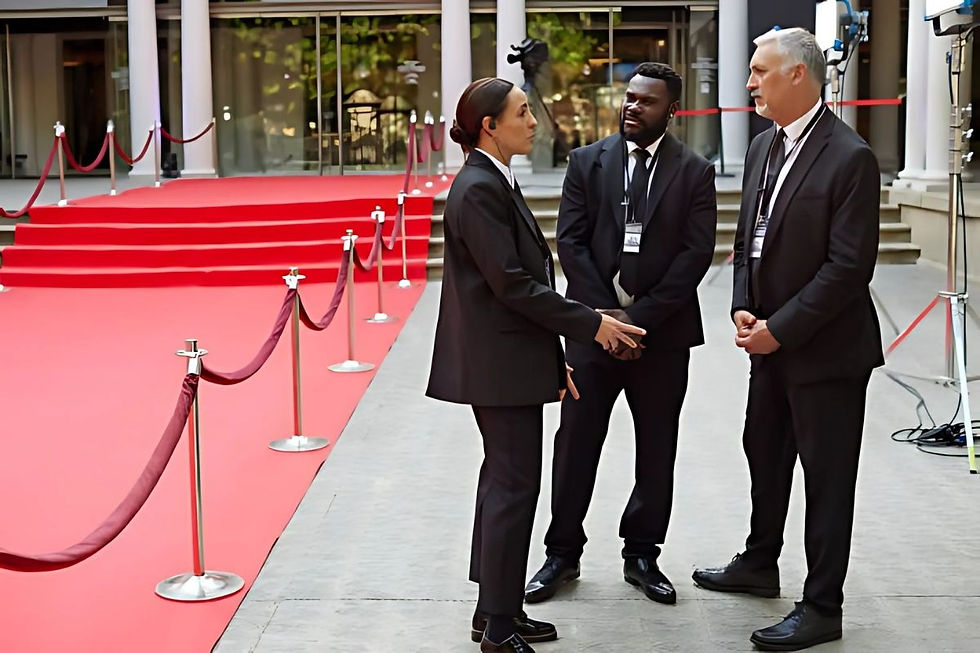
Every event needs a written and practiced event security plan. That means protocols in place before the doors open, not after an incident occurs. The plan should include personnel, maps, emergency contacts, and escalation procedures.
What Your Event Security Plan Must Include
A strong security plan starts with controlling movement and minimizing risk. These core elements form the backbone of any safe, well-managed event.
Entry/Exit Strategy: Define how attendees enter and exit. Use choke points to control flow and monitor each access lane.
Badge Verification & Credentialing: Confirm IDs and enforce zone-based access control using wristbands, QR scans, or RFID.
Emergency Exits and Fire Compliance: Mark all fire exits, test alarms, and comply with fire codes in advance with local officials.
Aligning with Local Regulations and Authorities
Staying compliant with Denver’s safety codes isn’t just smart, it’s required. Early coordination with local agencies ensures your event runs safely and without interruption.
Work with Local Agencies: Coordinate with Denver PD, EMTs, and the Fire Department for pre-clearance, support, and insight.
Meet Fire & Life Safety Standards: Ensure exits, stairwells, sprinklers, and extinguishers meet Denver’s safety codes.
Establish Emergency Communication Chains: If there's an incident, there must be one clear path of communication from the event floor to first responders.
Choose the Right Security Team for the Job

Your security team is your first and last line of defense. It’s not enough to have “bodies at the doors.” You need qualified, disciplined guards who know how to de-escalate tensions and handle real threats.
At Bellator Defense, our teams are:
Fully licensed, armed or unarmed depending on the need
Comprised of veterans, MMA fighters, and law enforcement professionals
Trained in verbal judo, conflict control, and emergency procedures
All event staff, from parking attendants to guest check-in leads, must also be briefed on the security playbook. Proper event staffing means everyone knows their job, not just the security officers.
Credentialing and Crowd Management

Your event management team must control the crowd without creating friction. Security isn’t about intimidation, it’s about trust and flow. Research in Safety Science highlights that effective crowd management relies on balancing safety protocols with maintaining public confidence and minimizing disruptions to movement patterns
Use crowd management strategies like:
Credential Tiers: Clearly identify VIPs, speakers, staff, vendors, and media using color-coded badges.
Badge Scanning & Access Logs: Use mobile check-in apps or scanners to monitor entry.
Traffic Control: Position guards at entrances and exits to manage foot traffic, especially during peak hours.
Good security is built on clear communication. Guests should know where to go and who to talk to. Confusion leads to backups and backups lead to risk.
Integrate Security Into Event Logistics

Security isn’t a side note. It should be baked into the event's logistics from the start. Every floorplan, schedule, and loading zone should be coordinated with your security partner.
Best practices for corporate event security:
Site Walkthroughs: Conduct multiple walkthroughs at different times of day.
Backstage & Vendor Access Control: Secure all support zones. Many security breaches happen behind the scenes.
Security Measures Testing: Run mock scans, test lighting, and evaluate guard response.
Lighting & Surveillance: Illuminate dark corners, blind spots, and parking lots. Install CCTV with real-time monitoring.
Denver venues vary wildly, from downtown hotels to open-air amphitheaters. Don’t assume one plan fits all. Tailor your security measures to the physical site.
Tech and Communication Tools You Need

Modern event security requires modern tools. Yes, radios and cameras matter. But your tech stack should also enhance guest safety and operational control throughout the event.
Recommended tools include:
Two-Way Radios: For rapid team communication without reliance on Wi-Fi or cellular
Mass Alert Systems: Use SMS blasts or push notifications to instantly inform attendees of emergencies
Cyber Protocols: Lock down guest Wi-Fi, use VPNs for check-in tablets, and restrict device access
CCTV & Alarm Integration: Live feeds help monitor vulnerable zones; panic alarms can alert law enforcement instantly
Emergency Response Procedures and Contingency Planning

No small or large-scale event is immune to emergencies. Your job is to minimize damage through planning and training. Everyone, from ushers to executives, should know the measures in place for various scenarios.
Be prepared for common threats:
Medical emergencies like seizures or injuries
Suspicious packages or abandoned bags
Aggressive guests or trespassers
Active shooter or hostile intrusion
Each risk should have a clear safety response protocol:
Evacuation route guides and team leaders
Medical support zones and triage stations
Coordination with law enforcement
Flexible staffing plans to cover unexpected exits or bottlenecks
Post-Event’s Security Review

Your event doesn’t officially end when the last guest leaves. A proper security review ensures every lesson is documented, every gap is identified, and every future event is safer and more controlled. This phase is critical for corporate planners who take risk seriously.
Secure Breakdown
Monitor the entire teardown process, including vendor exit, staging area cleanup, and equipment removal. Security should stay on-site until the last crew has checked out and the venue is secured. This prevents theft, damage, or unauthorized access after hours, common issues in larger venues.
Security Debrief
Hold a structured debriefing session with your full security team immediately after the event. Discuss what went right, what went wrong, and which protocols were or weren’t followed. Real-time input from the team is vital while details are still fresh and actionable.
Gather Feedback
Reach out to attendees, vendors, and internal staff for candid feedback on how secure they felt throughout the event. Ask if procedures were clear, if security presence was appropriate, and whether any concerns went unaddressed. This insight reveals blind spots that may not show up in official reports.
Document & Report
Log all incidents, a minor trespass, an unauthorized backstage entry, or a first aid event. Include time, location, personnel involved, and response actions taken. Create a detailed report that becomes part of your risk assessment for the next event, ensuring consistent improvement.
Execute Your Event With Confidence
These security planning tips for corporate events in Denver are more than just best practices, they’re essential for protecting your guests, your brand, and your bottom line. From risk assessment to crowd control, every detail matters when safety is on the line. With the right team and a solid plan, you can deliver a corporate event that’s both secure and seamless.
Need expert support for your next Denver event? Contact us today for a consultation and a tailored event security solution.
Frequently Asked Questions
What is the role of event management in security planning?
Event management plays a critical role in aligning security protocols with the event’s goals, timeline, and logistics. The event manager ensures communication between vendors, staff, and security teams to keep operations smooth and secure. Without proper coordination, even the best protocols can fail during live events.
Why is event safety important in corporate gatherings?
Event safety protects your people, brand, and assets. In corporate gatherings, one safety lapse can damage reputations and lead to legal consequences. Implementing clear security protocols ensures controlled access, emergency readiness, and peace of mind for all attendees—making events run professionally and without disruption.
What security protocols should be in place for large events?
Large events should include security protocols like controlled entry points, credential checks, emergency evacuation plans, and active surveillance. These measures help mitigate threats before they escalate. A layered approach ensures that all potential vulnerabilities are covered while keeping the guest experience smooth and non-intrusive.
How does technology improve event safety?
Technology enhances event safety by enabling real-time communication, surveillance, and access control. Tools like CCTV, two-way radios, and ID scanning systems support effective event management. These technologies allow your security team to monitor threats, respond faster, and maintain control across large-scale corporate events.
Who is responsible for enforcing security at events?
Security enforcement at events is typically handled by licensed security personnel in coordination with the event management team. Each party must understand their role and follow pre-established security protocols. This collaboration ensures that threats are identified early and handled before they compromise guest safety.


Comments